Field feature
Why You Keep Losing Fish on Lipless Crankbaits
The lipless crankbait is the ultimate early spring search tool, but it is notorious for lost fish. Here is why they are spitting the hook, and how a simple rod change will fix it.
It is early spring. The water is hovering around 50 degrees, and you are throwing a red lipless crankbait (like a Bill Lewis Rat-L-Trap or a Strike King Red Eye Shad) over a shallow flat.
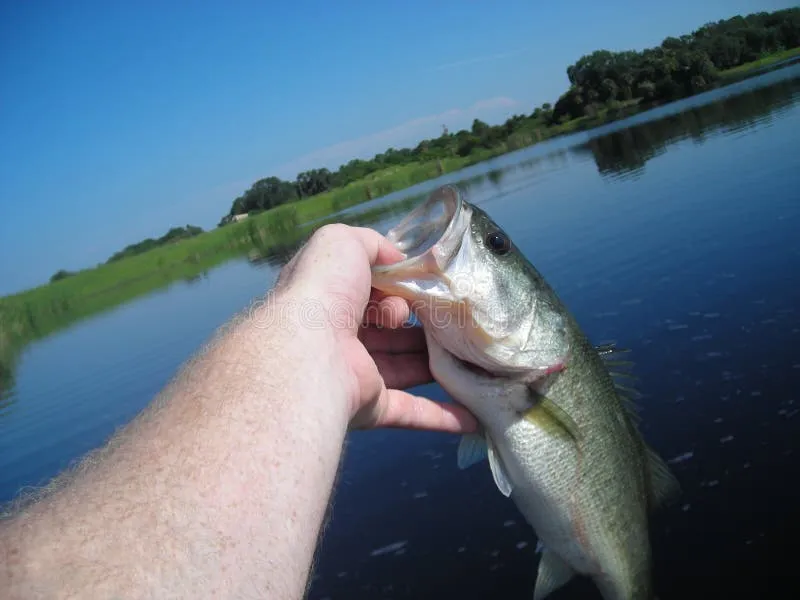
You get crushed. The fish feels heavy. Two seconds later, the bass violently shakes its head on the surface, the lure goes flying, and your line goes slack.
Ten minutes later, it happens again.
Lipless crankbaits are arguably the greatest pre-spawn reaction baits ever created, but they have a massive flaw: they are incredibly heavy and dense, making it very easy for a bass to throw the hook. If you are fishing them on the wrong rod and line, your landing percentage will be terrible.
1. The Physics of the “Thrown Hook”
A 1/2 oz or 3/4 oz lipless crankbait has a lot of mass. When a bass jumps and violently shakes its head, that heavy lure acts like a pendulum on a string.
If your fishing rod is too stiff (like a heavy-action jig rod) or your line has zero stretch (like pure braid), there is no shock absorption. When the bass shakes, the heavy lure leverages against the stiff rod, creating massive spikes of tension and slack. That rapid “tight-loose-tight-loose” action easily rips the relatively small treble hooks right out of the fish’s mouth.
2. The Solution: The Forgiving Rod
To land fish on a lipless crankbait, you must eliminate the leverage. You need a rod that acts like a giant shock absorber.
The Pro Setup: A Composite Glass Rod. Most professionals throw their lipless crankbaits on a rod made of a blend of graphite and fiberglass. Fiberglass is naturally much slower and “spongier” than modern high-modulus graphite.
When a bass eats the bait and runs, the parabolic bend of a glass rod bends deeply into the middle of the blank. More importantly, when the bass jumps and shakes its head, the soft tip of the glass rod continuously flexes back and forth, absorbing the violent shock and keeping constant, smooth tension on the treble hooks. The fish can’t get the slack it needs to throw the heavy bait.
3. The Line Exception
While you want a soft, forgiving rod, you still need to rip the bait out of the grass. Lipless crankbaits shine when you let them tick the tops of submerged vegetation and then violently “rip” them free when they snag.
Because of this, many pros pair their soft glass rod with fluorocarbon line (15 to 17 lb). The fluorocarbon has less stretch than monofilament, allowing you to snap the bait clean out of the grass, but the soft glass rod ensures you don’t tear the hooks out when the fish bites.
Bottom Line: Stop throwing your traps on your stiff worm rod. Switch to a medium-heavy, moderate-action rod (preferably glass or a glass composite). You will cast further, you will rip grass easier, and when that pre-spawn giant shakes its head, those treble hooks will stay pinned.
Related reading
Gear
Best Spinning Reel for Bass Fishing Beginners: The Unfiltered Truth
Forget the marketing hype and spec sheets. Here is exactly what matters when choosing a spinning reel for bass fishing, from a veteran bank angler’s perspective.
Gear
Buzzbait Modifications: Stop Fishing It Straight Out of the Box
A stock buzzbait catches fish, but a modified buzzbait catches monsters. Learn how to tune your topwater prop bait to produce the loudest, most obnoxious squeak possible.
Tactics
Deep Cranking: If You're Not Deflecting Off Cover, You're Not Fishing
Throwing a deep diving crankbait into open water and just reeling it back is taking your lure for a walk. The real violence happens the split second your crankbait smashes into a rock or stump.
评论系统预留位
这里已经为 Giscus 留好位置。等你创建 GitHub Discussions 后,把本组件中的仓库参数改掉,并把 enabled 改成 true 即可启用。