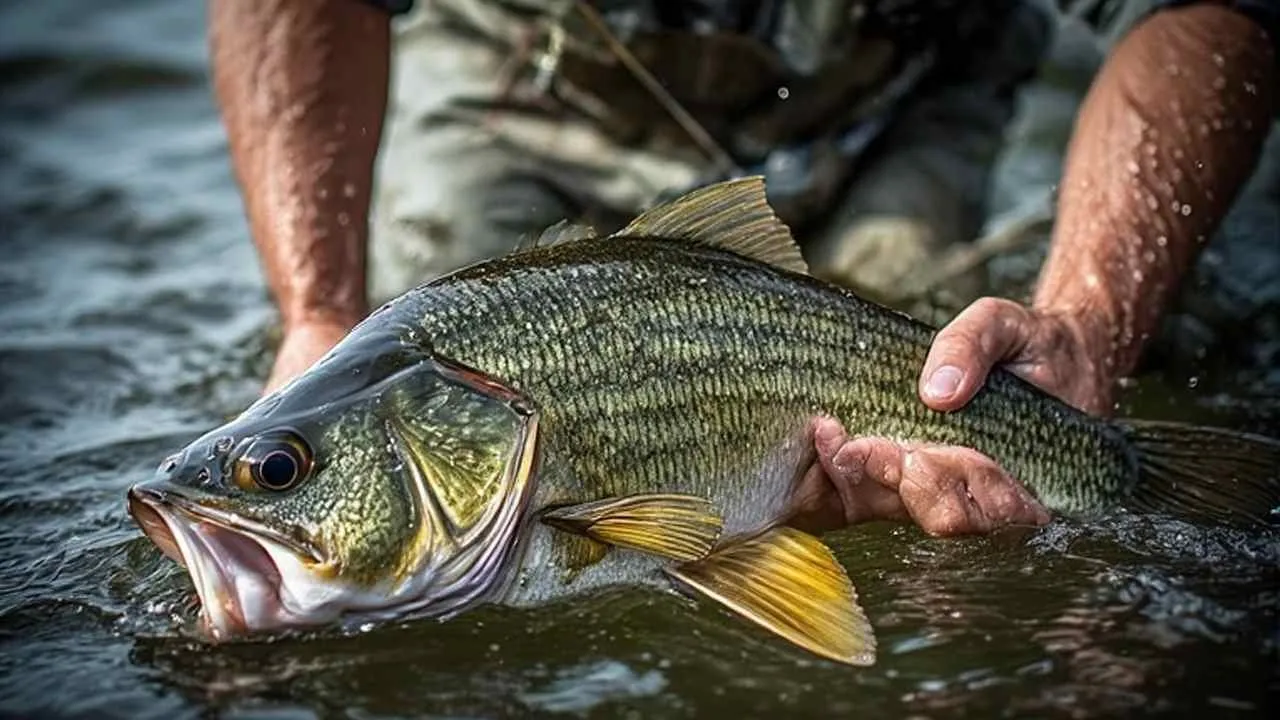
Field feature
Best Spinning Reel for Bass Fishing Beginners: The Unfiltered Truth
Forget the marketing hype and spec sheets. Here is exactly what matters when choosing a spinning reel for bass fishing, from a veteran bank angler’s perspective.
If you search Google for the “best spinning reel for bass fishing beginners,” you are going to get hit with a tidal wave of marketing nonsense. Articles written by people who haven’t held a rod in years will tell you that you need 12 bearings, carbon fiber handles, and aerospace-grade aluminum.
Let me save you some time and a lot of money: If you are fishing from the bank, trying to drag a 4-pound largemouth out of heavy weeds, 90% of those specs mean absolutely nothing.
When you’re out there on the dirt, navigating brush piles and wind knots, you need a tool, not a jewel. Here is the unfiltered truth about what actually matters when buying your first spinning reel for bass.
1. Drag Quality is Everything (Ignore the Bearings)
The guy at the tackle shop will spin a reel and say, “Feel how smooth that is? It’s got 10 bearings.” Great. But how smooth a reel feels when there’s no line on it has zero impact on catching fish.
What matters is what happens when a big bass grabs your Texas rig and surges toward a submerged log. If your drag system (the mechanism that lets line out under pressure) sticks or stutters even a millimeter, that sudden jolt will snap your line instantly. When testing a reel, lock the spool down with your hand and turn the handle hard. You want to feel a buttery, consistent resistance. If it feels jerky, put it back on the shelf. You need smooth, linear drag pressure—even if you’re only using 15 pounds of it.
2. Size 2500 is the Only Size You Need
Stop looking at the 1000 sizes. The spool is too narrow. If you ever spool it with fluorocarbon, the line memory will turn it into a coiled slinky, causing wind knots on every other cast. Stop looking at the 3000 and 4000 sizes. They are too heavy. When you are bank fishing, you are holding that rod for five hours straight. Extra weight ruins sensitivity and wears out your wrist.
The 2500 size is the goldilocks zone. It holds plenty of 15lb braided line, casts light weightless Senkos beautifully, and has enough backbone to winch fish through moderate cover.
3. Look for a One-Piece Bail Wire
This is the detail that cheap reels always screw up. Budget reels usually have a two-piece bail wire (the metal arm you flip open to cast) where the wire connects to the line roller with a noticeable gap. When you’re fishing in the wind and your braid gets a little slack, it will inevitably find its way into that tiny gap. You go to set the hook, the line snags, and snap.
Look for reels with a solid, one-piece cold-forged bail wire (like many mid-range Shimano and Daiwa models). It’s a tiny feature that prevents absolute misery on the water.
The Bottom Line
Don’t fall for the hype. Buy a 2500 size reel with silky smooth drag and a one-piece bail wire. The Shimano Sedona or the Daiwa Exceler will do everything you need and last for years if you keep the sand out of them. Take the money you saved, buy high-quality hooks and fluorocarbon leader material, and actually spend time learning to read the water.
Related reading
Gear
Buzzbait Modifications: Stop Fishing It Straight Out of the Box
A stock buzzbait catches fish, but a modified buzzbait catches monsters. Learn how to tune your topwater prop bait to produce the loudest, most obnoxious squeak possible.
Gear
Soft Plastic Toads vs. Hollow Body Frogs: Know the Difference Before You Cast
Throwing a hollow body frog in sparse grass is a missed opportunity. If you want to trigger violent reaction strikes over submerged weeds, you need the sputtering legs of a soft plastic toad.
Gear
Spinnerbait Trailer Hooks: The Unspoken Rule of Short Strikes
If you are fishing a spinnerbait without a trailer hook, you are voluntarily giving up at least 30% of your catch. Here is the dirty truth about short strikes.
评论系统预留位
这里已经为 Giscus 留好位置。等你创建 GitHub Discussions 后,把本组件中的仓库参数改掉,并把 enabled 改成 true 即可启用。