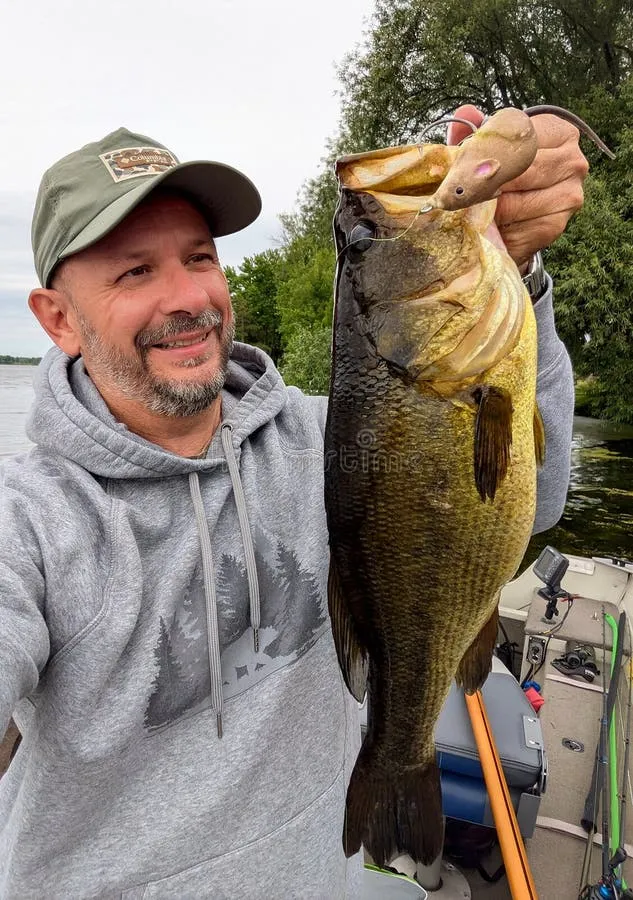
Field feature
The Wacky Rig O-Ring Scam: Why A Single Ring is Costing You Fish
You use an O-ring on your Wacky Rig to save your expensive stick baits from tearing. But that single piece of rubber is secretly destroying your hookup ratio.
Senkos are expensive, and bass love to tear them to shreds. To combat this, the bass fishing industry popularized the O-ring tool. You slide a tight rubber O-ring to the center of your stick bait, and then you slip your Wacky hook under the ring instead of piercing the fragile plastic.
It works. You will save money on plastic worms. But if you are only using one O-ring, you are making a massive rigging error that leads to missed strikes, lost fish, and sheer frustration.
1. The Parallel Problem
Look closely at your bait the next time you rig it with a single O-ring. Notice how the shank of the hook naturally aligns itself parallel to the body of the plastic worm.
When a bass inhales that bait and clamps its jaws shut, the hook lays flat against the thick plastic body of the worm. Often, the hook point rolls inward and actually buries itself in the plastic during the hookset.
When you swing, the hook either slides right out of the fish’s mouth harmlessly, or it only skin-hooks the fish, resulting in a lost bass halfway to the boat.
2. The Professional Fix: The Crossed-X Method
Tournament pros who make a living on finesse fishing don’t use a single O-ring. They use two.
Here is how you do it:
- Slide the first O-ring to the middle of the stick bait.
- Slide a second O-ring right on top of the first one, but cross them over each other so they form an “X” pattern on the worm.
- Slip your Wacky hook under the intersection of the X.
3. The 90-Degree Advantage
When you hook under the X, the tension from the two crossed rings forces the hook to stand perpendicular (90 degrees) to the body of the worm.
The hook point is now completely exposed and facing straight out. When a bass chomps down on the worm, the plastic is compressed, but the hook remains perfectly positioned to bite into flesh.
With a perpendicular hook, you don’t even need a bone-jarring hookset (which is dangerous on light fluorocarbon anyway). You simply reel up the slack, lean into the fish, and the exposed hook finds the roof of the mouth or the corner of the jaw almost automatically.
Bottom Line: Stop sacrificing your hookup ratio just to save a piece of plastic. Put an extra O-ring on your bait, make an X, and force that hook to stand up. Your landing percentage will skyrocket.
Related reading
Gear
Best Spinning Reel for Bass Fishing Beginners: The Unfiltered Truth
Forget the marketing hype and spec sheets. Here is exactly what matters when choosing a spinning reel for bass fishing, from a veteran bank angler’s perspective.
Gear
Buzzbait Modifications: Stop Fishing It Straight Out of the Box
A stock buzzbait catches fish, but a modified buzzbait catches monsters. Learn how to tune your topwater prop bait to produce the loudest, most obnoxious squeak possible.
Tactics
Deep Cranking: If You're Not Deflecting Off Cover, You're Not Fishing
Throwing a deep diving crankbait into open water and just reeling it back is taking your lure for a walk. The real violence happens the split second your crankbait smashes into a rock or stump.
评论系统预留位
这里已经为 Giscus 留好位置。等你创建 GitHub Discussions 后,把本组件中的仓库参数改掉,并把 enabled 改成 true 即可启用。