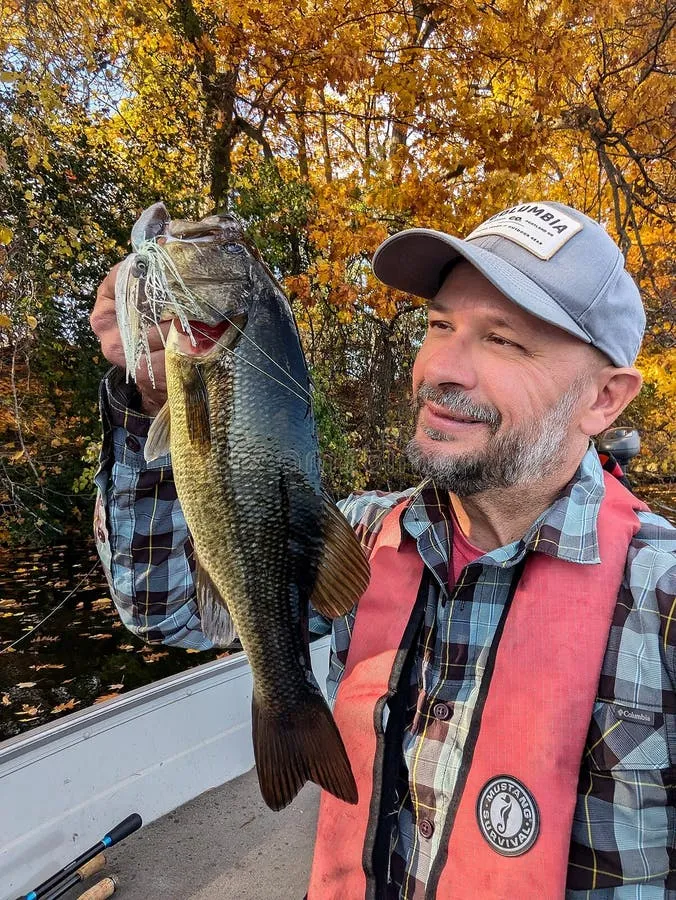
Field feature
The Spinnerbait Trailer Hook: Stop Missing Short Strikes
You feel a heavy 'thump' on your spinnerbait, but when you swing, you come back with nothing. If you aren't running a trailer hook, you are letting half the fish in the lake go free.
The spinnerbait is one of the greatest search baits ever invented for bass fishing. Its flashing blades and pulsating skirt trigger aggressive reaction strikes as it moves through the water column.
But anyone who throws a spinnerbait regularly knows the crushing heartbreak of a “short strike.” You are reeling along, feeling the steady thumping of the Colorado blade, when suddenly the rod loads up with a heavy tug. You swing for the fences with a massive hookset, and… nothing. The bait flies out of the water, completely untouched.
Why did you miss? Because you were fishing a spinnerbait bare, without the most critical piece of terminal tackle: The Trailer Hook.
1. The Anatomy of a Short Strike
A spinnerbait is a large, intrusive, and chaotic presentation. It has a massive wire frame, spinning metal blades up top, and a flowing skirt down below.
When a bass is aggressively feeding, it will “T-bone” the bait and swallow the entire lure head-first. However, when a bass is lethargic, highly pressured, or just reacting out of territorial aggression rather than hunger, it often attacks the bait from behind with a half-hearted “nip.”
The bass will simply suck in the trailing tails of the silicone skirt or nip at the flashing blades. Because the main hook of a spinnerbait is located far forward, buried near the heavy lead head, the bass never actually gets the hook point inside its mouth.
When you feel that heavy “thump” and swing, you are simply pulling the rubber skirt right out of the fish’s tightly closed lips.
2. The Insurance Policy
A trailer hook is a large, straight-shank, open-eye hook that slips over the main hook of your spinnerbait. It is secured in place with a small piece of rubber surgical tubing so it doesn’t slide off.
This simple addition extends your hooking profile all the way to the very back of the silicone skirt. The trailer hook rides perfectly upright, hidden within the pulsing strands of the skirt.
It is the ultimate insurance policy. When that non-committal bass comes up behind the lure and just barely nips the end of the skirt, that trailing hook slides right into its mouth. You don’t need a massive, crushing bite; the slightest bump or loss of blade vibration is all the excuse you need to sweep the rod and stick the fish securely in the upper lip.
3. The Exception to the Rule
If a trailer hook dramatically increases your hookup ratio, why wouldn’t you use it 100% of the time?
Because the trailer hook completely destroys the weedless nature of the spinnerbait. The heavy wire frame of a spinnerbait naturally deflects off wood and slides through grass, protecting the main hook. The trailer hook, however, trails freely behind without any protection. It will snag on everything.
The Rule of Thumb: If you are burning a spinnerbait over submerged grass flats, slow-rolling it in open water, or running it parallel to weed lines, a trailer hook is mandatory.
The only time you should take the trailer hook off is when you are specifically crashing the bait deep into the heart of laydown trees, thick brush piles, or exceptionally dense vegetation where snagging is inevitable.
Bottom Line: Stop cursing the fish for “missing” the bait. The fish didn’t miss; your hook was just in the wrong place. Slip a trailer hook over that main shank and turn those frustrating short strikes into fish in the livewell.
Related reading
Gear
Best Spinning Reel for Bass Fishing Beginners: The Unfiltered Truth
Forget the marketing hype and spec sheets. Here is exactly what matters when choosing a spinning reel for bass fishing, from a veteran bank angler’s perspective.
Gear
Buzzbait Modifications: Stop Fishing It Straight Out of the Box
A stock buzzbait catches fish, but a modified buzzbait catches monsters. Learn how to tune your topwater prop bait to produce the loudest, most obnoxious squeak possible.
Tactics
Deep Cranking: If You're Not Deflecting Off Cover, You're Not Fishing
Throwing a deep diving crankbait into open water and just reeling it back is taking your lure for a walk. The real violence happens the split second your crankbait smashes into a rock or stump.
评论系统预留位
这里已经为 Giscus 留好位置。等你创建 GitHub Discussions 后,把本组件中的仓库参数改掉,并把 enabled 改成 true 即可启用。