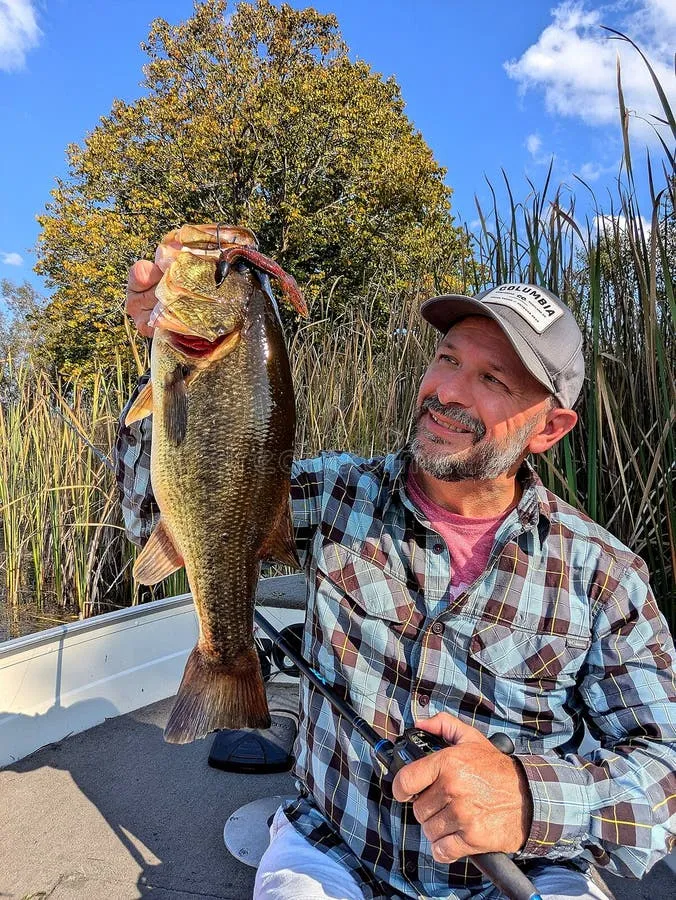
Field feature
The Hollow Body Frog Mod: Why You Must Bend the Hooks
Missing strikes on a hollow body frog is the most frustrating thing in bass fishing. The problem isn't always the fish missing the bait; it's the factory hook design.
There is nothing in freshwater fishing that gets the adrenaline pumping quite like a giant bass exploding through a mat of vegetation to crush a hollow body frog.
But the joy of the explosion is often instantly replaced by the heartbreak of the hookset. You wait two full seconds, you swing as hard as you can with a heavy rod and 65-pound braid, and the frog just comes flying out of the water like a bullet, completely unharmed.
Most anglers blame themselves for pulling the trigger too early, or they blame the bass for “missing the bait.” But the real culprit is usually the factory angle of the hooks.
1. The Weedless Flaw
Look closely at a brand new, premium hollow body frog right out of the package. Notice how the two massive, heavy-wire hooks sit perfectly flush against the soft rubber body.
Furthermore, to make the frog as weedless as humanly possible, the manufacturers design the hook points so they angle slightly inward, pointing toward the center line of the frog’s body.
This design allows you to drag the frog over the thickest, nastiest lily pads and hydrilla mats without snagging a single blade of grass. However, the ultimate weedless design is also incredibly “fish-less.”
When a bass eats the frog and compresses the rubber body, those inwardly-angled hooks still struggle to find purchase. Even when the body is fully flattened, the hook points are shielded. When you execute a violent hookset, you are literally dragging the flat backs of the hooks through the fish’s mouth and right out of its lips.
2. The Pliers Trick
The very first thing a seasoned frog fisherman does when they take a new frog out of the box is grab a pair of heavy-duty pliers.
Here is the modification:
- Grab one of the main hooks right at the bend with your pliers.
- Firmly and carefully bend the hook point UP and slightly OUT (away from the rubber body). You only want to bend it about 1/8 of an inch, or just a couple of millimeters.
- Repeat the process on the second hook.
After you do this, run your thumb gently over the back of the frog. You should feel the hook points slightly protruding and “biting” back at your thumb, rather than sitting flush.
3. The Acceptable Tradeoff
Will bending your frog hooks out make the bait less weedless? Yes, absolutely.
When you bend the hooks away from the body, the frog becomes slightly more prone to snagging a lily pad stem or picking up a piece of slimy milfoil.
But in bass fishing, everything is a game of percentages. Is it annoying to occasionally clear a piece of grass off your lure? Yes. Is it more annoying to finally get a 6-pounder to blow up on your frog, only to reel back a bait with no fish attached? Unquestionably.
Bottom Line: Stop prioritizing a perfectly clean lure over a perfect hookup ratio. Grab your pliers, bend those hooks out so they can do their job, and turn those heartbreaking blowups into fish in the boat.
Related reading
Gear
Best Spinning Reel for Bass Fishing Beginners: The Unfiltered Truth
Forget the marketing hype and spec sheets. Here is exactly what matters when choosing a spinning reel for bass fishing, from a veteran bank angler’s perspective.
Gear
Buzzbait Modifications: Stop Fishing It Straight Out of the Box
A stock buzzbait catches fish, but a modified buzzbait catches monsters. Learn how to tune your topwater prop bait to produce the loudest, most obnoxious squeak possible.
Tactics
Deep Cranking: If You're Not Deflecting Off Cover, You're Not Fishing
Throwing a deep diving crankbait into open water and just reeling it back is taking your lure for a walk. The real violence happens the split second your crankbait smashes into a rock or stump.
评论系统预留位
这里已经为 Giscus 留好位置。等你创建 GitHub Discussions 后,把本组件中的仓库参数改掉,并把 enabled 改成 true 即可启用。