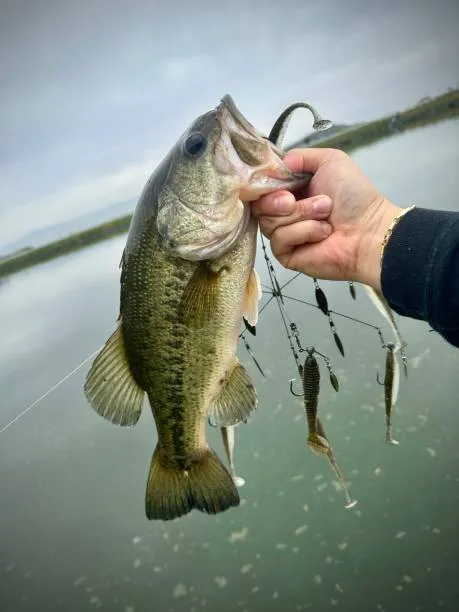
Field feature
The Feathered Treble Hook: Why Your Topwater Bait Needs a Tail
That small tuft of feathers on the back hook of your topwater bait isn't just for decoration. It is a critical piece of engineering that controls the action and triggers strikes on the pause.
When you examine premium topwater lures—like a high-end walking bait or a classic popper—you will often notice that the rear treble hook is dressed with a small tuft of white feathers and a few strands of flashabou.
Many anglers assume this is merely a cosmetic addition designed to catch the fisherman’s eye in the tackle shop. When the feathers eventually rot away or get torn off by the teeth of aggressive bass, they don’t bother replacing them. They simply continue fishing with a bare treble hook on the back.
If you are doing this, you are significantly altering the action of your lure and decreasing your strike-to-hookup ratio. That tuft of feathers is not a decoration; it is a vital mechanical component of the bait.
1. The Parachute Effect
The primary physical function of a dressed rear hook on a walking bait (like a Zara Spook) is to act as a hydrodynamic brake.
When you “walk the dog” by rhythmically twitching your rod tip, the bait violently zig-zags from left to right. When the bait glides to the side, the waterlogged feathers on the rear hook create drag at the back of the lure.
This “parachute effect” keeps the tail of the bait anchored in the water and prevents the lure from spinning out of control or over-rotating on a hard twitch. It forces the bait to make crisp, sharp directional changes. If you remove the feathers, you will instantly notice that the bait “slips” more on the surface and is much harder to keep in a rhythmic walking cadence.
2. The ‘Breathing’ Pause
Topwater fishing is not a constant, non-stop retrieve. The most explosive strikes often occur when you pause the bait next to a prime ambush point, like a submerged stump or a hole in the lily pads.
When you stop moving the bait, the magic of the feathered treble takes over. Even when the plastic body of the lure is completely motionless on the surface, the micro-currents and ripples in the water cause the submerged feathers to subtly flare open and pulse closed.
This is known as the “breathing effect.” To a bass stalking the lure from below, that tiny, pulsating movement looks exactly like the fluttering tail fin of a dying baitfish making its last struggling effort to survive. It provides the final illusion of life needed to trigger a cautious giant into committing.
3. The Strike Target
Finally, the feathered hook acts as a visual bullseye.
When a bass decides to attack a topwater lure, especially from behind, they look for a focal point. Without feathers, a bass may crash into the center of the hard plastic body, often resulting in the bait simply being knocked into the air without the hooks finding purchase.
The bright, moving tuft of feathers naturally draws the bass’s eyes (and its open mouth) directly to the rear treble hook. They inhale the feathers, and consequently, they inhale the hook.
Bottom Line: Do not fish your premium topwater baits without a dressed rear hook. If your feathers get ripped off, go to the tackle shop, buy a pack of pre-tied feathered treble hooks, and replace it immediately. That tiny piece of fluff is doing half the work for you.
Related reading
Gear
Best Spinning Reel for Bass Fishing Beginners: The Unfiltered Truth
Forget the marketing hype and spec sheets. Here is exactly what matters when choosing a spinning reel for bass fishing, from a veteran bank angler’s perspective.
Gear
Buzzbait Modifications: Stop Fishing It Straight Out of the Box
A stock buzzbait catches fish, but a modified buzzbait catches monsters. Learn how to tune your topwater prop bait to produce the loudest, most obnoxious squeak possible.
Tactics
Deep Cranking: If You're Not Deflecting Off Cover, You're Not Fishing
Throwing a deep diving crankbait into open water and just reeling it back is taking your lure for a walk. The real violence happens the split second your crankbait smashes into a rock or stump.
评论系统预留位
这里已经为 Giscus 留好位置。等你创建 GitHub Discussions 后,把本组件中的仓库参数改掉,并把 enabled 改成 true 即可启用。