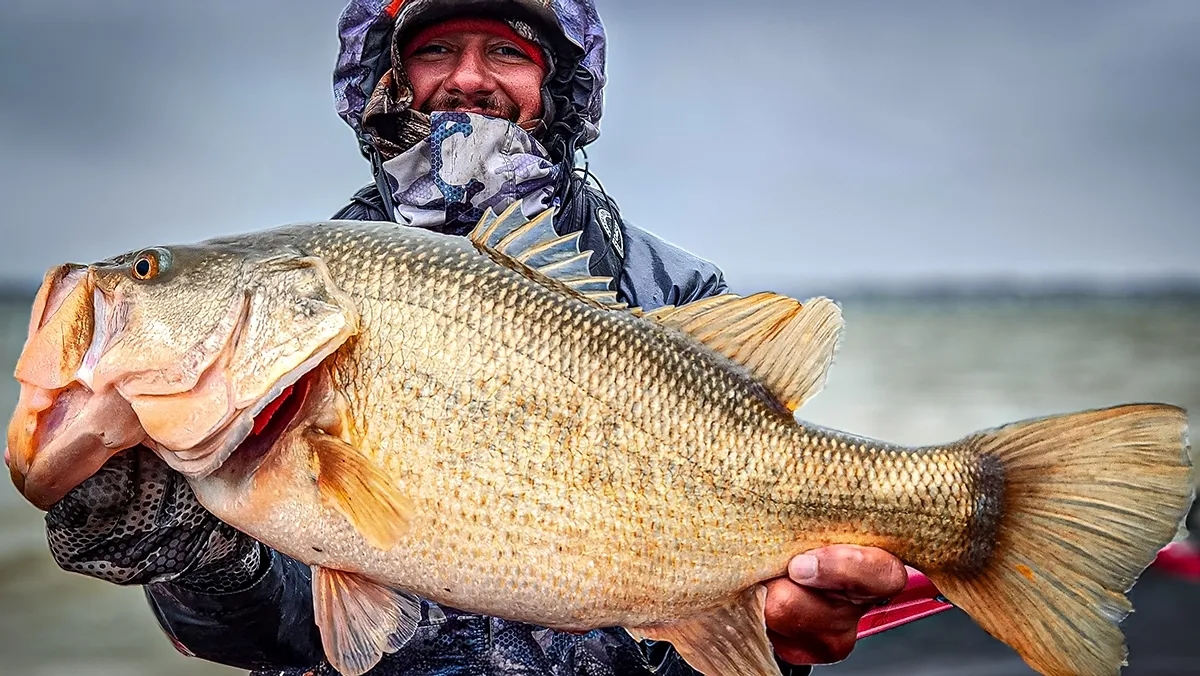
Field feature
Why Your Hooksets on Jigs Are Failing (And How to Fix It)
If you are losing fish on a flipping jig halfway back to the boat, you are probably making the most common mistake in bass fishing: The 'Reel Set'.
There is no feeling in bass fishing quite like the heavy, unmistakable “thump” of a big largemouth inhaling a 1/2-ounce flipping jig.
But for many anglers, that excitement quickly turns to heartbreak. You feel the bite, you pull back, the rod bends double… and then, three seconds into the fight, the lure comes flying back at your face.
If you are consistently losing fish on a jig, stop blaming dull hooks or bad luck. You are almost certainly committing the cardinal sin of jig fishing: You are “reel setting” instead of “slack lining.”
1. The Physics of a Jig Hook
A heavy flipping jig is armed with a thick-wire, massive hook protected by a stiff weedguard. To drive that piece of metal through the hard, bony roof of a bass’s mouth requires tremendous, violent force.
When a bass eats a moving bait (like a crankbait or a spinnerbait), they usually hook themselves against the tension of your steady retrieve. A “reel set” (just reeling faster and sweeping the rod) works perfectly there.
But a jig is fished on the bottom. When a bass picks it up, there is often slack in your line. If you just start reeling fast and lean back, the thick jig hook will simply slide forward in the bass’s mouth, hit the bony jaw, and pop out. You don’t generate enough explosive energy to penetrate the bone.
2. The Solution: Drop the Rod, Reel the Slack, Swing for the Fences
When you feel that “thump” on a jig, you must fight your instinct to pull back immediately. You need to create an explosion of energy.
Here is the exact sequence the pros use:
- Acknowledge the Bite: Feel the “tick” or the sudden heavy weight.
- Drop the Rod Tip: Instantly lower your rod tip toward the water. This gives the fish a split second to fully turn with the bait without feeling tension.
- Reel the Slack: Quickly crank your reel handle 1 or 2 times until the line is just about to go tight. Do not pull the bait!
- The Violent Snap: With your feet planted, snap the rod upward with as much violence as you can muster. You want to cross their eyes.
By dropping the rod and reeling the slack, you are creating “runway” for your rod to accelerate. By the time your rod reaches the 12 o’clock position, it is moving at maximum velocity, driving that heavy hook straight through the bone.
3. Don’t Stop Reeling
The second most common mistake happens immediately after the hookset. Anglers set the hook beautifully, but then they stop reeling to “feel” if the fish is on.
In that split second of hesitation, the fish shakes its head, throws the heavy lead jig, and gets off.
The moment you execute the hookset, your reel handle should be a blur. Keep the rod bent, keep the line incredibly tight, and winch the fish out of the cover. Give them absolutely no slack to throw the bait.
Bottom Line: Fishing a jig is not a game of finesse; it is a game of leverage and violence. Drop the tip, reel the slack, and swing like you mean it.
Related reading
Gear
Buzzbait Modifications: Stop Fishing It Straight Out of the Box
A stock buzzbait catches fish, but a modified buzzbait catches monsters. Learn how to tune your topwater prop bait to produce the loudest, most obnoxious squeak possible.
Tactics
Chatterbait Mastery: Stop Reeling So Fast and Start Ripping Grass
A vibrating jig is arguably the most powerful search bait ever invented, but most anglers just cast and reel. Here's how to turn a Chatterbait into a giant-bass magnet.
Tactics
Decoding the Thermocline: Why You Can't Catch Bass in Deep Water During Summer
Dragging a jig in 40 feet of water in August? You are fishing in a dead zone. Here is why understanding the thermocline is the most important lesson of summer bass fishing.
评论系统预留位
这里已经为 Giscus 留好位置。等你创建 GitHub Discussions 后,把本组件中的仓库参数改掉,并把 enabled 改成 true 即可启用。