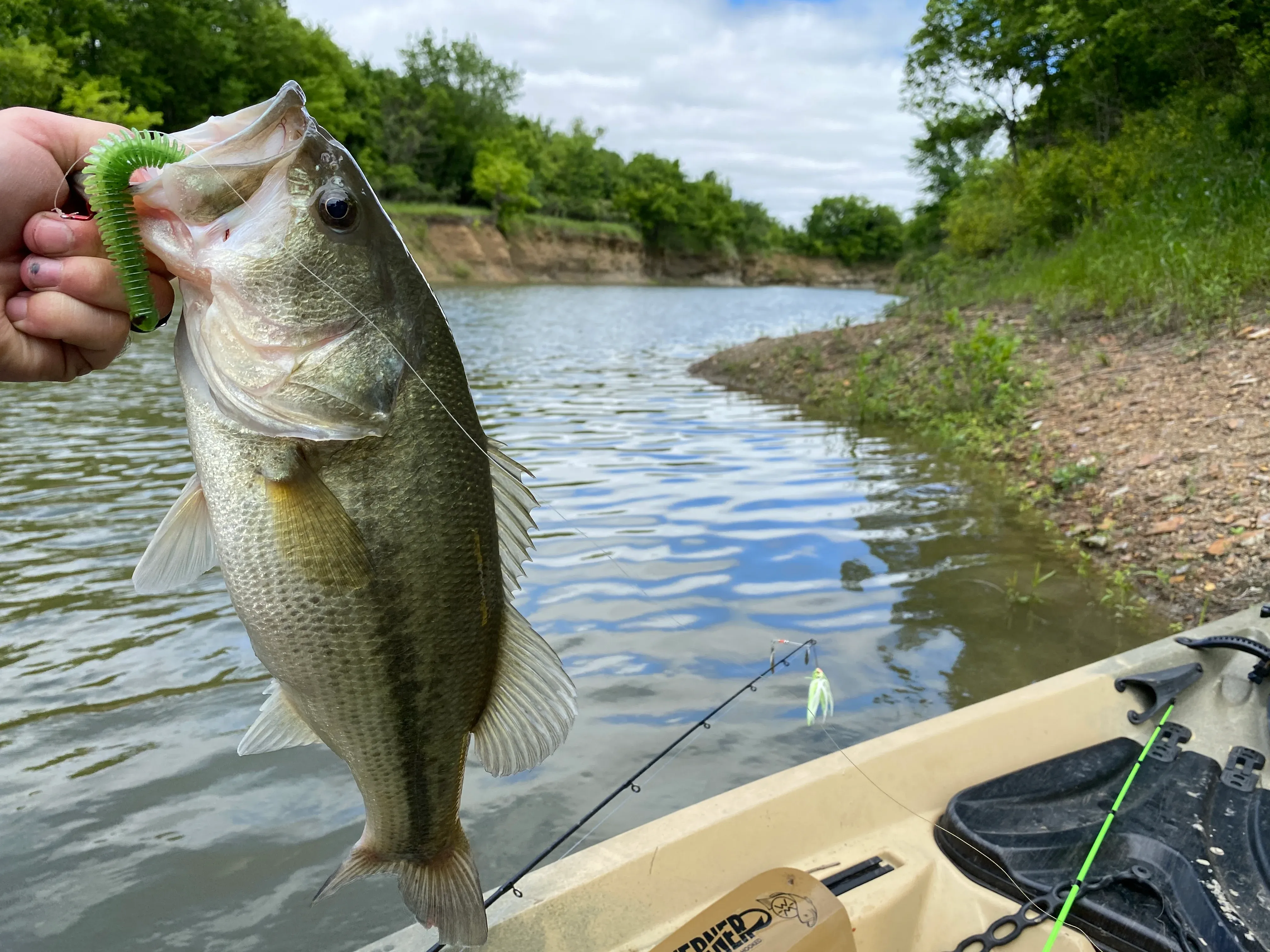
Field feature
The Wacky Rig Revolution: Why the Silliest Looking Rig is the Deadliest
It looks completely ridiculous. Hooking a stickbait directly in the middle makes no logical sense until you drop it in the water and watch bass lose their minds.
If you took an alien to a bass fishing tournament and showed them a Texas Rig or a Swimbait, they would nod in understanding. “Ah, yes, it mimics a baitfish or a creature. Logical.”
But if you showed them a Wacky Rig—a straight plastic worm hooked dead in the center like a limp piece of spaghetti—they would think you were crazy. It doesn’t look like anything that lives in the water. It casts awkwardly, and it falls completely horizontally.
Yet, the Wacky Rig is undeniably one of the most lethal finesse presentations ever invented. If you aren’t throwing it, you are missing out on the easiest fish in the lake.
1. The Magic of the Quiver
The secret to the Wacky Rig lies entirely in its descent.
When you hook a heavy, salt-impregnated stickbait (like a Yamamoto Senko) directly in the middle and drop it into the water on a slack line, water resistance pushes up against the two drooping ends. This causes both ends of the worm to flap and quiver violently as it slowly sinks horizontally through the water column.
To a bass, this doesn’t look like a piece of plastic. It looks exactly like a dying baitfish, a struggling worm, or a helpless insect. It is a completely vulnerable, irresistible meal.
2. The Golden Rule: Slack is Your Friend
The biggest mistake anglers make when fishing a Wacky Rig is keeping their line tight.
If you cast the bait and immediately close your bail to pull the line tight, the bait will swing toward you like a pendulum. More importantly, the tight line will kill the magical quiver. The worm will just look like a stiff stick sliding through the water.
You must let it fall on a completely slack line. Cast it out, strip a few feet of extra line off the spool, and watch the line on the surface of the water. When the bait hits the bottom (or when the line suddenly jumps sideways because a bass grabbed it on the fall), then and only then do you reel up the slack.
3. The Hook Placement and the O-Ring
Hooking a soft plastic worm directly through the middle creates a massive problem: durability. A violent cast or a single fish will tear the hook right through the soft plastic, destroying a $1 worm instantly.
The Fix: Use an O-Ring or shrink tube. Slide a small rubber O-ring over the middle of the worm, and slide your hook under the O-ring rather than piercing the plastic itself. This simple trick will allow you to catch five or six fish on a single worm instead of just one.
Bottom Line: Don’t let the goofy appearance fool you. When the fishing gets incredibly tough, skip a Wacky Rig under a dock, give it plenty of slack, and wait for the line to “tick.” It is the ultimate slump-buster.
Related reading
Gear
Buzzbait Modifications: Stop Fishing It Straight Out of the Box
A stock buzzbait catches fish, but a modified buzzbait catches monsters. Learn how to tune your topwater prop bait to produce the loudest, most obnoxious squeak possible.
Tactics
Chatterbait Mastery: Stop Reeling So Fast and Start Ripping Grass
A vibrating jig is arguably the most powerful search bait ever invented, but most anglers just cast and reel. Here's how to turn a Chatterbait into a giant-bass magnet.
Tactics
Decoding the Thermocline: Why You Can't Catch Bass in Deep Water During Summer
Dragging a jig in 40 feet of water in August? You are fishing in a dead zone. Here is why understanding the thermocline is the most important lesson of summer bass fishing.
评论系统预留位
这里已经为 Giscus 留好位置。等你创建 GitHub Discussions 后,把本组件中的仓库参数改掉,并把 enabled 改成 true 即可启用。