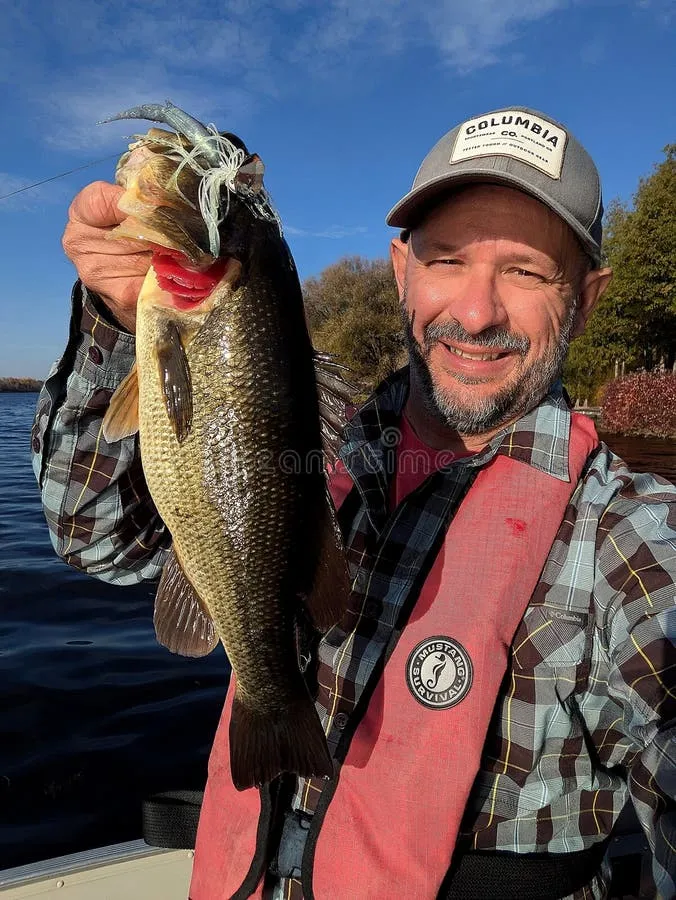
Field feature
The Swim Jig: Stop Treating It Like a Pitching Jig
Most anglers buy a swim jig, hop it on the bottom twice, get no bites, and throw it back in the box. Here is how to actually fish the 4x4 of the bass world.
If you look at the deck of any touring pro’s boat, no matter the season or the lake, you will almost always find a swim jig tied on. It is the ultimate 4x4 off-road vehicle of bass fishing.
Yet, for many weekend warriors, the swim jig is deeply misunderstood. They buy one because it looks cool, cast it out, let it sink, and slowly hop it along the bottom like a traditional flipping jig. When they don’t catch anything, they assume the bait doesn’t work.
A swim jig is not a bottom-bumping bait. It is designed to be kept moving through the middle or upper part of the water column. Here is how to unlock its true, vicious potential.
1. It is a Spinnerbait in Disguise
Think of a swim jig not as a jig, but as a spinnerbait that has lost its blades. It serves the exact same purpose: finding active fish in shallow cover.
However, where a spinnerbait will constantly hang up in heavy vegetation like water willow, lily pads, or eelgrass, the pointed nose and vertical line tie of a properly designed swim jig will slither right through it without snagging. When the fish are buried in the weeds and ignoring the flash of a spinnerbait, the subtle, pulsing swimming action of a swim jig is your ticket.
2. The Alabama Shake
If you just cast a swim jig out and reel it back in a straight, boring line, you will catch a few fish. But if you want to trigger reaction strikes from big, lazy bass, you need to add the “Alabama Shake.”
As you steadily reel the bait back in, constantly pop and shake your rod tip with short, rapid twitches. This forces the swim jig to dart erratically side-to-side, making the silicone skirt flare and breathe violently. It turns a piece of lead and plastic into a frantic, fleeing bluegill desperately trying to escape the cover.
3. Pair it with the Right Trailer
The trailer you thread onto the back dictates how the bait runs.
- For clear water or fast retrieves: Use a single-tail grub or a straight-tail swimbait. It offers low water resistance, allowing you to burn it just beneath the surface like a fleeing shad.
- For muddy water or slow retrieves: Thread on a bulky, kicking crawfish trailer (like a Strike King Rage Tail) or a wide-wobbling paddle tail swimbait. The massive water displacement will help fish track it in low visibility, and the drag will help keep the bait higher in the water column even at a crawling speed.
Bottom Line: Stop fishing your swim jigs on the bottom. Keep your rod tip up, keep the bait moving through the thickest cover you can find, and give it some life. When a bass decides to eat a vibrating swim jig on a steady retrieve, they don’t just tap it—they try to rip the rod out of your hands.
Related reading
Gear
Buzzbait Modifications: Stop Fishing It Straight Out of the Box
A stock buzzbait catches fish, but a modified buzzbait catches monsters. Learn how to tune your topwater prop bait to produce the loudest, most obnoxious squeak possible.
Tactics
Chatterbait Mastery: Stop Reeling So Fast and Start Ripping Grass
A vibrating jig is arguably the most powerful search bait ever invented, but most anglers just cast and reel. Here's how to turn a Chatterbait into a giant-bass magnet.
Tactics
Decoding the Thermocline: Why You Can't Catch Bass in Deep Water During Summer
Dragging a jig in 40 feet of water in August? You are fishing in a dead zone. Here is why understanding the thermocline is the most important lesson of summer bass fishing.
评论系统预留位
这里已经为 Giscus 留好位置。等你创建 GitHub Discussions 后,把本组件中的仓库参数改掉,并把 enabled 改成 true 即可启用。