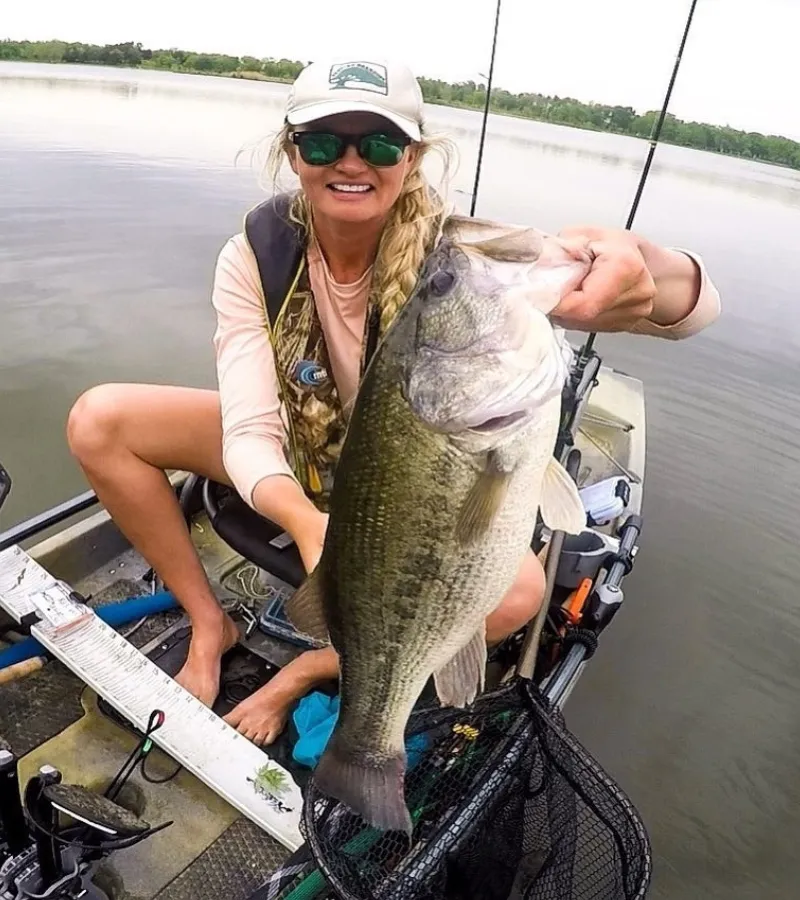
Field feature
The Silent Pitch: How to Enter the Strike Zone Without Spooking the Fish
If your jig lands in the water with a loud 'PLOP,' you just ruined the spot. The difference between catching a 2-pounder and an 8-pounder is entirely in how your bait enters the water.
You have located the perfect piece of cover: an isolated laydown tree hanging halfway into the water, casting a dark shadow on a sunny day. It is a textbook big-bass hideout.
You make your pitch. Your heavy 1/2 oz jig sails through the air and crashes into the water right next to the log with a massive PLOP. Water splashes everywhere.
You wait. You jiggle it. Nothing.
What you don’t realize is that an 8-pound bass was sitting under that log, but the instant your heavy lead jig crashed through the surface like a meteor, you spooked her. She didn’t swim away, but she went on high alert, her fins locked, and she completely shut her mouth.
If you want to catch giant bass in shallow cover, your bait must enter the water with zero sound and zero splash.
1. The Physics of the Silent Entry
When a real crawfish or bluegill slips into the water from a lily pad or a bank, it doesn’t make a loud splash. It enters the water seamlessly.
If your jig makes a loud splash, it is because it is entering the water from too high of an altitude, and gravity has accelerated it too much. To fix this, you must master the low-trajectory pitch.
When you execute a pitch, your rod tip should never point high in the air. The bait should travel parallel to the surface of the water, ideally no more than 6 to 12 inches above the surface.
2. The Thumb is the Brake
The trajectory is only half the battle. The true secret to a silent entry lies in your thumb on the baitcaster spool.
Most beginners pitch the bait and let the spool spin freely until the bait crashes into the water, stopping the spool only after the splash.
Pro anglers use their thumb as a precision brake pad. As the bait is traveling through the air and approaching the target, you must gradually apply thumb pressure to the spool, physically slowing the bait down in mid-air.
The Goal: The bait should run completely out of forward momentum at the exact microscopic fraction of a second that it touches the surface of the water.
If you time it perfectly, the bait doesn’t “fall” into the water; it simply kisses the surface and slips underneath without a sound.
3. Following the Bait Down
The final piece of the silent entry happens immediately after the bait touches the water.
If you engage your reel or hold your rod tip still the moment the bait enters the water, the heavy jig will suddenly swing toward you on a tight line (a pendulum effect), completely missing the vertical cover you just pitched to.
To keep the bait falling vertically, you must “follow the bait down” with your rod tip. The moment the jig silently slips into the water, lower your rod tip at the exact same speed the bait is sinking. You want to maintain a semi-slack line—enough slack so the bait falls straight down, but tight enough that you can feel the “tick” of a reaction strike on the fall.
Bottom Line: Stop bombing your spots. Shallow water giants are old, smart, and easily terrified. Practice your pitching in a bucket in your backyard until you can drop a 1/2 oz piece of lead into the water without making a ripple. Silence is deadly.
Related reading
Gear
Buzzbait Modifications: Stop Fishing It Straight Out of the Box
A stock buzzbait catches fish, but a modified buzzbait catches monsters. Learn how to tune your topwater prop bait to produce the loudest, most obnoxious squeak possible.
Tactics
Chatterbait Mastery: Stop Reeling So Fast and Start Ripping Grass
A vibrating jig is arguably the most powerful search bait ever invented, but most anglers just cast and reel. Here's how to turn a Chatterbait into a giant-bass magnet.
Tactics
Decoding the Thermocline: Why You Can't Catch Bass in Deep Water During Summer
Dragging a jig in 40 feet of water in August? You are fishing in a dead zone. Here is why understanding the thermocline is the most important lesson of summer bass fishing.
评论系统预留位
这里已经为 Giscus 留好位置。等你创建 GitHub Discussions 后,把本组件中的仓库参数改掉,并把 enabled 改成 true 即可启用。