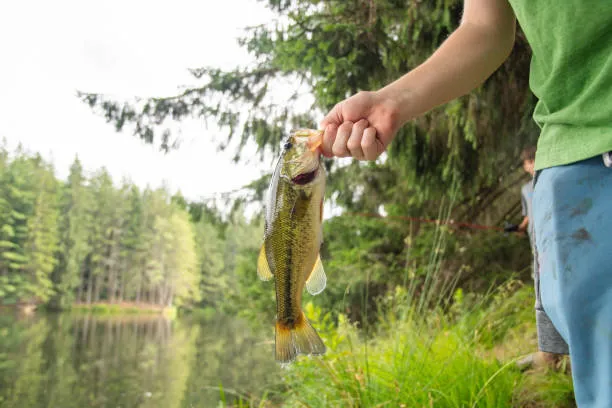
Field feature
Drop Shot Mistakes That Are Costing You Fish
The drop shot is the most reliable finesse rig in existence, but if you are constantly shaking your rod tip or tying your hook wrong, you are doing it a disservice.
When a cold front rolls through or a lake is pounded by hundreds of boats during a weekend tournament, bass will completely shut down. They will ignore spinnerbaits, run away from crankbaits, and refuse to chase anything.
When this happens, every pro reaches for one spinning rod on their front deck: The Drop Shot.
It is the ultimate “do nothing” bait. A small weight sits on the bottom, while a tiny soft plastic worm hovers suspended a foot or two above it, practically begging to be eaten.
However, despite its simplicity, many anglers make fundamental errors that completely ruin the magical presentation of the drop shot.
1. The “Parkinson’s” Shake
The most common mistake anglers make with a drop shot is believing they have to impart constant action to the bait. They cast out, the weight hits the bottom, and they immediately start shaking the rod tip violently and rapidly.
Down below, that tiny, delicate finesse worm is violently seizing like it has been electrocuted. In the clear water where drop shots shine, this erratic, unnatural movement looks terrifying to a highly pressured bass. It will swim over to investigate, see the violent shaking, and immediately swim away.
The Fix: Learn to Dead Stick. Once your weight hits the bottom, reel up your slack until you can just barely feel the tension of the sinker. Then, stop moving. Literally do nothing. Let the natural currents in the lake, or the microscopic tremors in your hand holding the rod, impart a hyper-realistic, subtle quiver to the suspended worm. The less you do, the more it looks like a dying, helpless meal.
2. The Hook is Pointing Down
If you drop your drop shot into the water next to the boat and your hook is sagging downward toward the sinker, you have rigged it incorrectly.
When the hook points down, the soft plastic worm hangs limply parallel to the main line. Not only does this look unnatural, but it virtually guarantees you will miss the fish when it bites, because the hook point is shielded by the line and the belly of the bait.
The Fix: Your hook must stand out at a perfect 90-degree angle from the main line, pointing straight up toward the surface. To achieve this, after you tie your Palomar knot, you must take the tag end of the line (the part that goes down to your sinker) and thread it back down through the top of the hook eye. This simple step locks the hook securely into that aggressive, horizontal posture.
3. Setting the Hook Like a Jig
When a bass eats a drop shot, there is rarely a violent “thump.” More often, your rod tip will just slowly load up and feel “mushy,” like you dragged your weight into a clump of wet leaves.
Because you are using incredibly light line (usually 6- to 8-pound fluorocarbon) and tiny, thin-wire hooks, a violent, overhead hookset will either snap your line instantly or rip the small hook right through the thin skin of the bass’s mouth.
The Fix: Employ the “Reel Set.” When you feel that heavy, mushy weight, simply start reeling fast while lifting your rod upward smoothly and firmly. The sharp, thin-wire hook will effortlessly penetrate the lip without the need for explosive force.
Bottom Line: The drop shot is about patience and subtlety. Tie the hook right, stop shaking the rod, and gently reel into the fish. Let the rig do the work for you.
Related reading
Gear
Buzzbait Modifications: Stop Fishing It Straight Out of the Box
A stock buzzbait catches fish, but a modified buzzbait catches monsters. Learn how to tune your topwater prop bait to produce the loudest, most obnoxious squeak possible.
Tactics
Chatterbait Mastery: Stop Reeling So Fast and Start Ripping Grass
A vibrating jig is arguably the most powerful search bait ever invented, but most anglers just cast and reel. Here's how to turn a Chatterbait into a giant-bass magnet.
Tactics
Decoding the Thermocline: Why You Can't Catch Bass in Deep Water During Summer
Dragging a jig in 40 feet of water in August? You are fishing in a dead zone. Here is why understanding the thermocline is the most important lesson of summer bass fishing.
评论系统预留位
这里已经为 Giscus 留好位置。等你创建 GitHub Discussions 后,把本组件中的仓库参数改掉,并把 enabled 改成 true 即可启用。