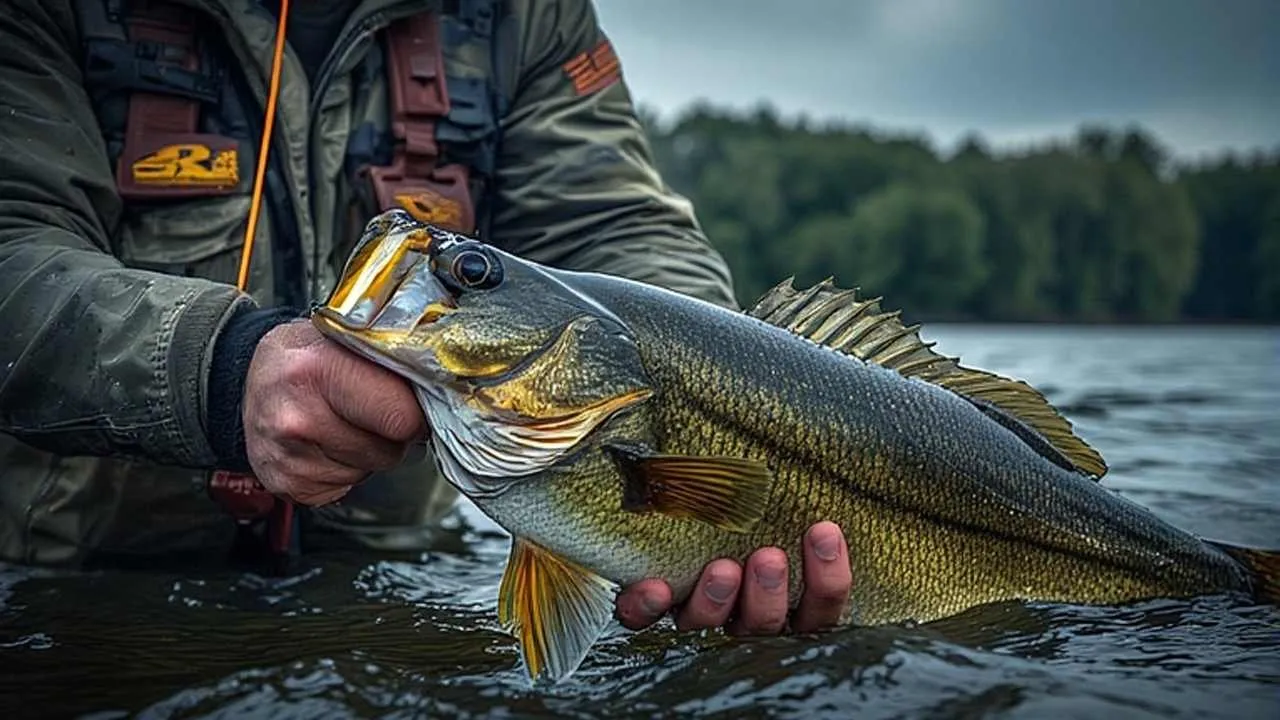
Field feature
Why You Are Losing Fish on Swimbaits (And How to Fix Your Hookset)
Throwing big swimbaits is all about patience. If you set the hook like you are fishing a jig, you will pull a $30 lure right out of a 10-pounder's mouth.
You have been throwing a massive 8-inch soft plastic swimbait for six hours without a bite. Your shoulder aches, and your mind is wandering.
Suddenly, your rod loads up, and a giant shadow boils on the surface. Muscle memory takes over. You rear back with a violent, lightning-fast hookset… and your expensive swimbait comes flying out of the water, missing the fish entirely.
Fishing giant swimbaits requires a complete rewiring of your brain when it comes to the hookset. If you use a standard jig or Texas rig hookset, you will lose the biggest fish of your life.
1. The “Inhalation” Problem
When a big bass eats a traditional jig, it flares its gills and creates a vacuum, sucking the small, compact bait deep into the back of its mouth in a fraction of a second.
A giant swimbait is a different story. It is a massive, heavy piece of plastic or wood. When a bass attacks it, they don’t always inhale the whole thing instantly. Often, they T-bone it (grab it from the side), or they grab the tail section and continue swimming forward while slowly working the bait deeper into their crushers.
If you set the hook the instant you feel the initial “tick” or heaviness, you are simply pulling a massive piece of plastic through their closed teeth before the hook points have even entered their mouth.
2. The Sweep Set (The “Reel-Down” Method)
To catch fish on big swimbaits, you must adopt the Sweep Set. You need to give the fish time to eat the bait and turn its head.
Here is the protocol when you feel a bite on a swimbait:
- Do Not Jerk. Fight every instinct you have to violently pop the rod tip.
- Keep Reeling. The moment you feel the fish, just keep turning the reel handle steadily. Do not stop. You want the line to get tight purely from the fish holding the bait and you reeling.
- Wait for the Rod to Load. As you keep reeling, your rod will start to bend under the heavy, pulsing weight of the fish.
- Sweep. Only when the rod is fully loaded under the heavy weight of the bass should you finally react. Do not snap the rod upward; instead, use your hips and violently sweep the rod to the side, leaning backward and continuing to reel as fast as you can.
3. The Treble Hook Exception
There is a slight caveat. If you are fishing a massive hard swimbait (like a glide bait) that is armed with exposed treble hooks, the physics change slightly.
You still do not want to snap-set violently. A violent jerk will rip the relatively shallow-penetrating treble hooks right out of the fish’s skin. The “keep reeling and sweep” method still applies perfectly here. You want to apply smooth, constant, and immense pressure to bury the trebles and keep them pinned.
Bottom Line: Big baits catch big fish, but only if you have the discipline to let them eat it. Stop snap-setting. Feel the weight, reel into the fish, and sweep. It feels unnatural at first, but it is the only way to put a true giant in the boat.
Related reading
Tactics
Chatterbait Mastery: Stop Reeling So Fast and Start Ripping Grass
A vibrating jig is arguably the most powerful search bait ever invented, but most anglers just cast and reel. Here's how to turn a Chatterbait into a giant-bass magnet.
Tactics
Decoding the Thermocline: Why You Can't Catch Bass in Deep Water During Summer
Dragging a jig in 40 feet of water in August? You are fishing in a dead zone. Here is why understanding the thermocline is the most important lesson of summer bass fishing.
Tactics
Deep Cranking: If You're Not Deflecting Off Cover, You're Not Fishing
Throwing a deep diving crankbait into open water and just reeling it back is taking your lure for a walk. The real violence happens the split second your crankbait smashes into a rock or stump.
评论系统预留位
这里已经为 Giscus 留好位置。等你创建 GitHub Discussions 后,把本组件中的仓库参数改掉,并把 enabled 改成 true 即可启用。